Sunday, December 09, 2018

Kamaal R Khan is a victim

You may call Kamaal R Khan all kinds of names for posting a video where he is supposed to have made derogatory comments targeting the LGBT community - I might join you in the name-calling if and when I do watch the video. But frankly, it matters little to me what he says. On any subject. What I do care about is that at least some of you join me in calling him a victim. A victim of our statism - a level of intolerance that asks for the State to intervene and shut down free speech.
A lot of you would say that Khan and others like him are not exercising their freedom of expression (#FoE) but abusing it through hate speech. Most of you would have dismissed the news with thoughts like: 'Serves him right' or 'he is just an attention seeker' or maybe even 'This Ujjawal Krishnam is an attention seeker'. The action against Khan is yet another in a long list of governments acting against individuals for mere speech but it is probably the first instance where an individual is sought to be punished by law for comments against the LGBT community. Yes, there are consequences to slander. As there should sometimes be. However, there could be broader, lasting consequences for LGBT individuals and their allies as well as for those on 'the other side of the fence'. So, here's a blog post after a long gap mainly to say that hate speech is also free speech. There is no freedom of expression if we do not allow what we may consider 'hate speech', allow expression of what some or even the majority might find offensive. We must at least not seek to punish someone through legal means for what we may consider to be offensive.
Without FoE, the church would still have us think that the earth is the centre of the universe. Without FoE, freedom fighters wouldn't have been able to advocate for India's independence (although some were still charged with 'sedition'). Sans FoE, whistle-blowers and the media would not be able to expose corruption, cronyism, nepotism in government and its policies. No FoE would probably mean one-party rule because there could be no opposition. If there were zero FoE, even #LGBT activists would not have been able to advocate for re-legalisation of same-sex love and reading down of Section 377 of the Indian Penal Code. Heck, without #FoE, I would not be able to blog this post. This much might be easy to agree if you are an LGBT rights activists or just a 'liberal' in popular understanding. Now comes the hard part. 
Who decides what is 'hate speech'? If you wish the government to discriminate between what you define as 'free speech' and 'hate speech', you are well down the path to death of #FoE (the bad news is that we have been on that path for sometime now). No one, absolutely no one is qualified to decide what is 'hate speech' and what is not, least of all a politician or a bureaucrat. Not even a lawyer or a judge qualifies, even though we have been stupid to allow elected representatives who have made laws for us that do exactly that.
There will always be differences in what one person sees as hate speech and the other as free speech. What makes one person more qualified than the other? Any law that tries to circumscribe #FoE (and we have multiple of those, enabled by the Constitution of India), gives scope for the subjectivity of a judge and the subjectivity of a cop to come into play. Although such public servants are paid to protect people while upholding the rule of law, by now you should know that people have opinions and egos, they get offended and they do let that influence their actions. The result is always: Might is Right. The innocent get crushed.
There's enough real crime to go around. The State should not be distracted from its job of handling crimes where there are victims. They must not be allowed to confuse their priorities. Khan's is a victim-less crime. Same-sex love was a victimless crime too until 5 September 2018. I'd like Krishnam to at the very least show how he is tangibly affected by Khan's video forget how one man's comments affect a population of millions?    
Condemn hateful comments. You must. That would be an exercise of FoE obviously. Counter abuse with valid criticism, and even abuse if you wish to fall to that level. But you have no right to muzzle someone. You are using the government as a proxy to do that literally, not figuratively. Restraining  someone, not just for speaking what they feel but also wrongfully confining them. Abuse ought to have no space in a civilised world. But let's face it, we are still evolving. We allowed that poster boy of liberal values, Nobel Peace Prize Laureate Barack Obama, who is responsible for the killing of many, to evolve his position on LGBT equality. Can we not allow the same courtesy to people who are only spewing hateful words?
They will show their hand. They might not evolve - we have seen evolution failures such as an otherwise intelligent Harvard professor (Subramaniam Swamy) - thus proving to be exception to the rule. However, they should be allowed to expose their own failures. FoE is a barometer of what a society is like. As a side note, it can help activists strategise their communication and advocacy. Who is equality-friendly; on whom not to waste your resources; which message works in which situation.
Both wings might be offended by this post. The Left and the Right. Even some self-proclaimed libertarians. The right choices would be to either ignore or criticise. The wrong choices would be to tell Blogger to take down this blog/this post or to file a police complaint. Do you really want to control what others are able to read , hear or watch? Do you want to decide what others should think and what they shouldn't? Sadly, for most people on either side, the answer is 'yes' even if they consider themselves to be free speech advocates. This may be especially true of LGBT activists. This is even more unfortunate because restricting speech can hurt the cause of LGBT equality disproportionately. Someone who takes offence to it even more than a Khan or a Swamy can put legal obstacles in advocacy efforts. You might think it impossible in the euphoric aftermath of the Supreme Court verdicts on Section 377 but that is a fallacy. Five people overruled what two of their peers thought about the validity of a law. Tomorrow nine people could overrule those five. Difficult but not impossible. Especially in a country like ours going through a churn, where the resulting poison is in the air that we breathe. There are already enough tools against FoE speech in the hands of the powerful. As an LGBT rights advocate, can you say with certainty that it will not be used against any one of us? By using such laws against the likes of Khan, we are validating them and strengthening the hands of the State. We are allowing it to define what it considers pornographic, obscene or a threat to public health and 'morality', Instead, we should be demanding more freedom from our rulers. Count me out, I do not wish to be part of that section of the amorphous LGBT community that feels offended enough by Khan to demand that the police be called in on him.

Monday, February 08, 2016

Under State control

A piece I wrote for The Hindu's Mumbai edition... it was published the day after the Supreme Court held an open court hearing on whether to consider the curative petitions against its own verdict that had upheld Section 377 of the Indian Penal Code.

http://www.thehindu.com/news/cities/mumbai/news/nitin-karani-when-the-state-makes-choices-on-our-behalf/article8187623.ece

There were three sets of people with a very keen eye on the proceedings in Supreme Court in the matter of the curative: thousands of LGBT people and their allies; some legal eagles and the press; and a miniscule minority of opponents, mostly ‘religious’. This last group feels that not only must it oppose homosexuality within its own private sphere but also impose its world view on everyone else through the might of the State, even to the extent of punishing consenting adults with up to 10 years of time in jail. Compare this with maximum punishment of a ritual bath for a homosexual act (that too only for the priestly class) prescribed by the Manu Smriti.

We can debate the authenticity of the Manu Smriti and its importance, but it contrasts with the extreme position that the opponents, including the State, have taken by wanting to retain Section 377 in the Indian Penal Code (IPC). By now it has been argued often enough that Sec 377 is a law based on Victorian morality, which was itself rooted in the Bible, and that much of the IPC is a relic of the British Raj days.

The larger point here is illustrated in the fable of the Arab traveller and the camel, who first begged to insert its nose into the tent and then other parts of his body, with the Arab finally thrown out of his own tent. The State entered into our bedrooms with the IPC and now it refuses to get out. It has been decades since the State’s right to interfere in our choice of partners — sexual and marital — is being contested but it refuses to yield. The Arab traveller remains at the mercy of the camel when it should be the other way round. We, the people, have allowed the State to take control of our lives increasingly, to the extent that we have forgotten the liberties that were ours naturally. In every sphere of our life, the State limits and regulates both our economic, social and personal choices.

This did not happen overnight. It happened gradually, like in the fable, but it now seems pretty irreversible. In fact, we, the people, give the State more power every day over ourselves, even to make choices on our behalf each time we demand that the State perform a function other than the minimum required for us to exercise our choices freely, without fear to our life and property.

Most of us, wherever we may place ourselves on the political spectrum, only pay lip service to liberty, equality and freedom of expression; we do not know what we ask for when we demand that the State enact new statutes and more stringent laws (when it does not even execute existing laws fairly and efficiently, allowing scope for misuse), instead of reducing them to the minimum and simplifying the rest. This can be seen in every area of our life, from ‘net neutrality’ and use of social media to fiscal and monetary policies, and the selling and buying of our own assets. Governments, meanwhile, are only interested in increasing their power over the people. So there will be some noises about liberalisation and minimum government, but every government’s actions are quite the opposite in the guise of maximum governance and ‘social justice.’

What social justice is served by keeping Section 377 in the IPC? What does the State achieve by either punishing or the threat of punishing adults for a ‘crime’ without victims? Did social order and public morality breakdown when the Delhi High Court re-legalised ‘gay sex’ (given it was never a crime pre-IPC)? Did homosexuality spread across the nation like a newly-discovered virus and threaten nationhood in addition to heterosexual ‘manhood’?

The answers to all of these questions are staring at us but, no, the courts and the government will take their time to exercise their wisdom and decide what is good or bad for we, the people. Until then, far from enjoying the liberties and benefits available to heterosexual couples, we lesbian, gay and bisexual and even transgender people must pretend we do not break the law. Or else resign ourselves to the possibility that some individual or a cop may take it upon themselves to use Section 377 for harassment or extortion, if not for legal prosecution.

Of course, LGBT people will continue to watch the SC very closely, to see if it does take this last opportunity to correct its error of judgement.

Sunday, September 13, 2015

333 under 377

About a month ago, India's crime records bureau released stats for 2014 (very efficient, considering the year had ended only some six months ago). The stats made news this time because, among other things, the numbers for Section 377 of the Indian Penal Code were tabulated and released for the first time  -- we don't know what was behind this - was the bureau driven by a desire simply to deter crime or to highlight how India still discriminates against gay people.

Maybe it was just part of the new efficiency under a tough taskmaster who is scaring the bureaucracy into doing some work for a change. (Stats on environment-related crime were also released for the first time, so I am ruling out any motivation to support equal rights for gay men). In fact, the Deccan Herald noted a new keenness to prosecute LGBT individuals, but gave no basis for that claim - maybe that was just the handiwork of an enthusiastic reporter or sub.

The media reports of these numbers agitated the people who are against Section 377, especially LGBT activists. Not! That non-reaction was understandable at the time, as most people, relying on anecdotal evidence, may have assumed that almost all of these cases were filed against men abusing children rather than adults in a consensual relationship.

Now a Hindustan Times reporter has apparently done some digging around and broken down the numbers some more for us. It seems one-third of the total 1,148 cases of Section 377, that is 383 cases were not of child abuse. My gratitude to the reporter and HT for this detail, although some of the statements and conclusions in the same report are maddening.

The same report implies that trial courts acquitted the accused in 50 of these 383 cases while the rest of the cases are still pending in courts across the country. If activists in the metros and Tier-2 cities are unaware of these 383 cases, this could mean that gay men in relatively remote places away from the attention and capabilities of activists, the media and organisations like Lawyers' Collective are being prosecuted.

This story will be repeated this year and year after year, and these men will remain just statistics in a government bureau's report and, at best, mentions in news reports and blog posts like this one. A lot of people still live with the fond hope that the Supreme Court will reverse the judgement of its own two-bench court in favour of that by the lower-rung Delhi High Court, so that we will be free of Section 377 and start the long march towards equality for LGBT people backed by the law. But even if that miracle does happen, it looks like the SC will continue to take its own sweet time to hear the curative petition against the injustice of its two-member bench in a process as transparent as vantablack -- even lawyers don't seem to know how it prioritises its work and when it will deign to consider the petition.


That's very convenient for the legislators we elect as they can always hide behind the legal system and refuse to evolve from politicians into lawmakers who also remove obsolete laws. They will come to our community events, even invite us to their events, indulge in some rhetoric to raise our hopes, pose for pictures with some vain LGBT people, and fail to deliver. The voices of exceptions like Tathagata Satpathy will be drowned out in the din of the empty vessels in Parliament.

Agha α—…α—Ία—·α—… - Thank you for the music


I just watched an interview of Salma Agha promoting the upcoming 'Dunno Y 2' and her song in the film. (Watch the interview here if you are fan/curious about her/the film - it's a bit irritating how she attempts to be non-committal about her views on same-sex love).

Most people probably remember her as the 'Nikaah' actress and playback singer though she acted/sung in a few more forgettable films - of these, I can't forget her 'Mera naam Salma' number though.

More than all of these, even 'Nikaah', I will always remember Agha for an album of songs with her sister as co-singer, with lyrics by Amit Khanna (and 'music' by Bappi Lahiri) that came out even before 'Nikaah'. I was probably in my early teens then, and had discovered Rhythm House store thanks to my mom and her brother's love for music and a new LP player.

I already had a tape of ABBA hits (my first), gifted to me by the uncle (no, I wasn't out to him - I came out many years later). By sheer chance, I spotted the LP of the Agha album and bought it. I am sure it wasn't a hit album - most people my age haven't heard about it and it's not even listed in Agha's discography on Wikipedia. So I am sure not many here will share my enthusiasm for it. Watch one of the songs from the album below. Maybe it will inspire someone to produce a stage musical, in this season of ABBA copycats and musicals!


Saturday, September 13, 2014

How we define 'rape'

I won't go into the question of what sexual acts should or should not be termed 'rape'. In this note, I just want to remind ourselves that Indian law and society only see it as a violent act against a woman by a man. I believe that it should include such acts against any person, by any person, man, woman, transgender....
We live in a time where gender lines are blurring and people are asserting the rights to change parts of their physical sex and to present themselves free of the limitations of birth, culture, orthodox ideas of gender identity and sexual orientation. In such a time, shouldn't our rape/sexual assault laws become fair and representative of our evolving notions of selfhood? Even the widely acclaimed Nalsa judgement on recognition of transgenders does not expand the definition of rape although it expresses concern that they are vulnerable to sexual assault.
Friends and acquaintances have told me about men who approached them claiming that they were forced to have sex by other men and even women. Such incidents may be fewer in number than rapes in the traditionally or legally understood sense, but does it mean there should not be laws against such acts? 
I acknowledge this is not the first time this question is being raised. In fact there was a proposal to amend the law in India after the well-known gang rape of a woman in Delhi in December 2012, but I believe the Congress-led government developed cold feet, ironically under pressure from women's groups
What prompted me to bring up this question again today were two recent news items. One was a report of an incident of groping of a woman by a hijra in Bombay. And the other was a report about Pinki Pramanik's exoneration of charges including rape
Some LGBT activists are unsurprisingly thrilled at the second piece of news. I am not in a position to discuss the merits of the cases against Ms Pramanik but note that as per the news report, the defence claimed that the charge of rape cannot be made because the law doesn't apply to rape by a woman. My sympathies are with Ms Pramanik with regards to the way she was treated by the media, the police, the medical establishment and many other people as a fallout of the cases against her. And I am glad the cases have now concluded. 
More importantly for the rest of us, especially lawmakers, it is time to reflect on the questions I have asked here and consider amending the law. I admit the rape of a man by another man is already within the ambit of Section 377 of the Indian Penal Code. In fact, there seem to be some Indians who think sex between men can only be an act of violence and not an expression of love. The example of such a person that immediately comes to mind is Meenakshi Lekhi, although she is a lawyer and a lawmaker, and she ought to know better. Some people will find the example of Ms Lekhi extreme and refuse to see her as someone with a belief system beyond one that is articulated by the BJP to which she belongs. But I believe she represents the tip of the metaphorical iceberg of ignorance in Indian society.
The battle against such ignorance will continue. As queer individuals, I hope we are more aware and proactive about fixing much that is wrong with our laws, not just Section 377.

PS. I am not sure why activists who have taken up this case of rape of a hijra   (http://timesofindia.indiatimes.com/city/jaipur/Transgender-alleges-gang-rape-by-cops-in-Ajmer/articleshow/36365899.cms) aren't insisting on application of Section 377. They seem to be relying on the rape law instead.

Friday, June 13, 2014

Kashish Mumbai International Queer Film Festival, 2014 - a roundup

Varta has just published my experience of the 5th Kashish film festival here. Hope it's worthy of your time. Apologies for the errors of syntax and grammar. (In my defence, I had the handicap of an injured wrist that made typing painful.) Here's an extract from the beginning as an appetiser:

Every year, a couple of months before May, one feels trepidation: will there be a new edition of Kashish or not? If you have had a glimpse behind the scenes into the sheer amount of effort and hand wringing to put together one edition, you’d understand why the apprehension. But each year Kashish Mumbai International Queer Film Festival not only happens but also grows bigger in scale in what seems on the face of it a miracle. Festival director Sridhar Rangayan has a zest for cinema and an indefatigable passion for LGBT equality, which is probably why, come May, one knows that Kashish is definitely on, come hell or high water. Of course, it must require Sridhar to summon all of his will power and tap into all of his goodwill to bring together an ever-growing band of friends and queer allies, starting with festival co-organiser Humsafar Trust and festival patron Shyam Benegal.

Mumbai's iconic Liberty cinema had Kashish billboards and the festival name on the marquee. The centre of the Liberty building's exterior was draped with a Rainbow flag. (Pic courtesy: Vivek Anand) 

Monday, December 31, 2012

The pink rupee

Earlier this year, I wrote a piece on the potential of the "LGBT market" for an insight report on the "pink economy" that was published by MSL Group India and produced by their head of content (and my friend and former colleague from my days at Mid-Day), +Ashraf Engineer. The report was recently launched.


The full report can be read here but below is a draft of the piece I wrote. Would appreciate your comments:

It is not our case that LGBT people will buy a product or service solely because of their sexual orientation or gender identity (SOGI). However, there are some potential benefits from promoting your brand as a queer-friendly one. It is important to consider these while also setting realistic expectations from this emerging niche market.

It is safe to assume that LGBT people are no different from society at large in terms of their dispersion on metrics such as age, education, economic background, income, religion and so on. What sets them apart is not just SOGI, but also their spending (and saving) behaviour. That, and to some extent, their ‘look West’ policy for attitudes (towards society and the individual’s place in it; relationships; human rights, etc.) and popular culture (for example, TV shows). (Instead of labelling it ‘Westernisation’, it may be more apt to term it the evolution of a global identity, a process which is clearly not limited to the LGBT community. However, that is a different debate.) An crude comparison for our purposes may be the perceived Western outlook of the Parsi community.              


Money, money, money: One of the chief reasons to be upbeat is, of course, money. It is not that this ‘community’ comprises individuals with higher-than-average incomes, but more disposable income. And they are good spenders. Especially on clothes, gadgets, travel, grooming, alcohol, entertainment and so on (in random order).  


Growing numbers: No, homosexuality is not infectious. What is spreading though is confidence. More people than ever are ‘out’ and choosing to lead a gay lifestyle -- they prefer to remain single rather than cave into societal pressures to get married; stay independent of their parents and siblings, or possibly migrate to a metro; and be more bold in their career and other economic choices. This confidence comes from a mix of factors such as decriminalisation of homosexuality, globalisation, the spread of the Internet and social media and a younger demographic profile of the community. This sense of confidence and the spread of social media is starting to coalesce LGBT people into a group that often thinks and acts alike. Note the popularity of Blackberry phones (because of BBM), at least among the more avid networking and sexually active set. This sense of confidence and community can only increase with legal and social reform that we feel is inevitable.


Leaders, not followers: Not every LGBT person is a style diva. However, the LGBT community creates trends rather than following them. Quite a few LGBT people are early adopters, be it technology, fashion or music. More importantly, they are excellent at networking and influencing. This should make them a good audience to test new products and services for one.  


Brand loyalty: Perceptions highly matter in the LGBT community. If your brand is seen as ‘LGBT friendly’ (e.g., supportive of equal opportunity at the workplace, Gay Pride), then you are on the gaydar. How much love you receive depends on the friendliness ranking. But if you are perceived negatively, be ready to face some music. The community can lobby, and how. Examples of this abound in the developed world but closer home TV9 had to face heat for a particularly homophobic story by its Hyderabad bureau and even had to cough up a fine of one lakh rupees to the National Broadcasters’ Association besides running an apology for three days. Another example, the makers of ‘Dostana’, a film that was praised, but mostly panned, for its gay quotient, have already started clarifying via the media that the sequel will be more positive. And they are busy trying to push the stars of their new releases as ‘gay icons’, a term much abused in Indian journalism, incidentally. The stronger sense of allegiance probably comes from the stigma and marginalisation faced by the LGBT community. So generally speaking, if you are starting a queer-run business, then you should receive at least an initial wave of support to help you take off.


Having said all this, look before you leap. Profit is a legitimate pursuit if the means and the intent are legit too. It is better to to have no pretenses of being LGBT friendly, nor venture into this market half-heatedly, if one does not have the appetite to defend one's conviction. There is yet value judgement around issues of SOGI, there will always be. It is difficult to imagine a time when there will an Utopian embracing of human diversity by hundred per cent of the world's population. Even countries which have made progress in bringing laws that demand equal treatment for every citizen see cases of homophobia, often violent. Human beings judge each other, and brands, according to their personal understanding of what is moral. Some of that good and bad halo will be attached to your brand as well. Gutsy brands wouldn't care though not just because boldness expands the market (and money has no colour) but because they believe they are doing the right thing.


The question of the size of the LGBT market is the most contentious one. How many LGBT people are there, even the Supreme Court, which is hearing appeals against decriminalizing of homosexuality, wondered recently (as if that should be a deciding factor, with all due respect to the honorable judges). The hair-splitting over statistics is tied deeply to the question of identity. Sexual behavior and identity is not set in stone though; sexual orientation at least is a continuum. Some days you might be towards one end of the scale and on other days towards the opposite end (the two ends being exclusive attraction to the same sex and exclusive attraction to the opposite sex, with a range of bisexuality in between). If there are no neat boxes to put people in, how do you count them? Then, some people dislike the various terms that are current, some dislike being labelled per se, and many, many more are scared to identify with any label because of the stigma and discrimination. Any surprise then that there is no reliable estimate of the LGBT population? What has emerged so far, though, is that the percentage of exclusively gay men and women who are sexually active could be 2-10%. However, the percentage of sexually active bisexuals is believed to be much higher at 35-45%. Also, while estimating the market size, one needs to include the wider set that is not sexually active. How much these numbers translate into money terms is anyone's guess but OutNow Consulting, which is not based in India, recently estimated it at US$200 billion annually, based on 6% of the country's GDP, assuming that percentage of the population are LGBT adults.


This percentage probably represents the potential, an opportunity that can be exploited in the best conditions, not the current conditions. If there was already as huge a market as OutNow estimates, then queer-run businesses that are targeting this market mainly should have been able to ride out the poor conditions of rising rentals and inflation, and high interest rates that afflict the economy in general. A US$200 billion market will be up for grabs but with greater legal reform and change in society's attitudes, further penetration of the Internet, and, of course, the first movers in the market.

Saturday, March 17, 2012

In the name of God


A version of this piece appeared in Bombay Dost magazine in August 2011. The Supreme Court of India is currently hearing arguments against the Delhi High Court's decision to read down Section 377 of the Indian Penal Code.  

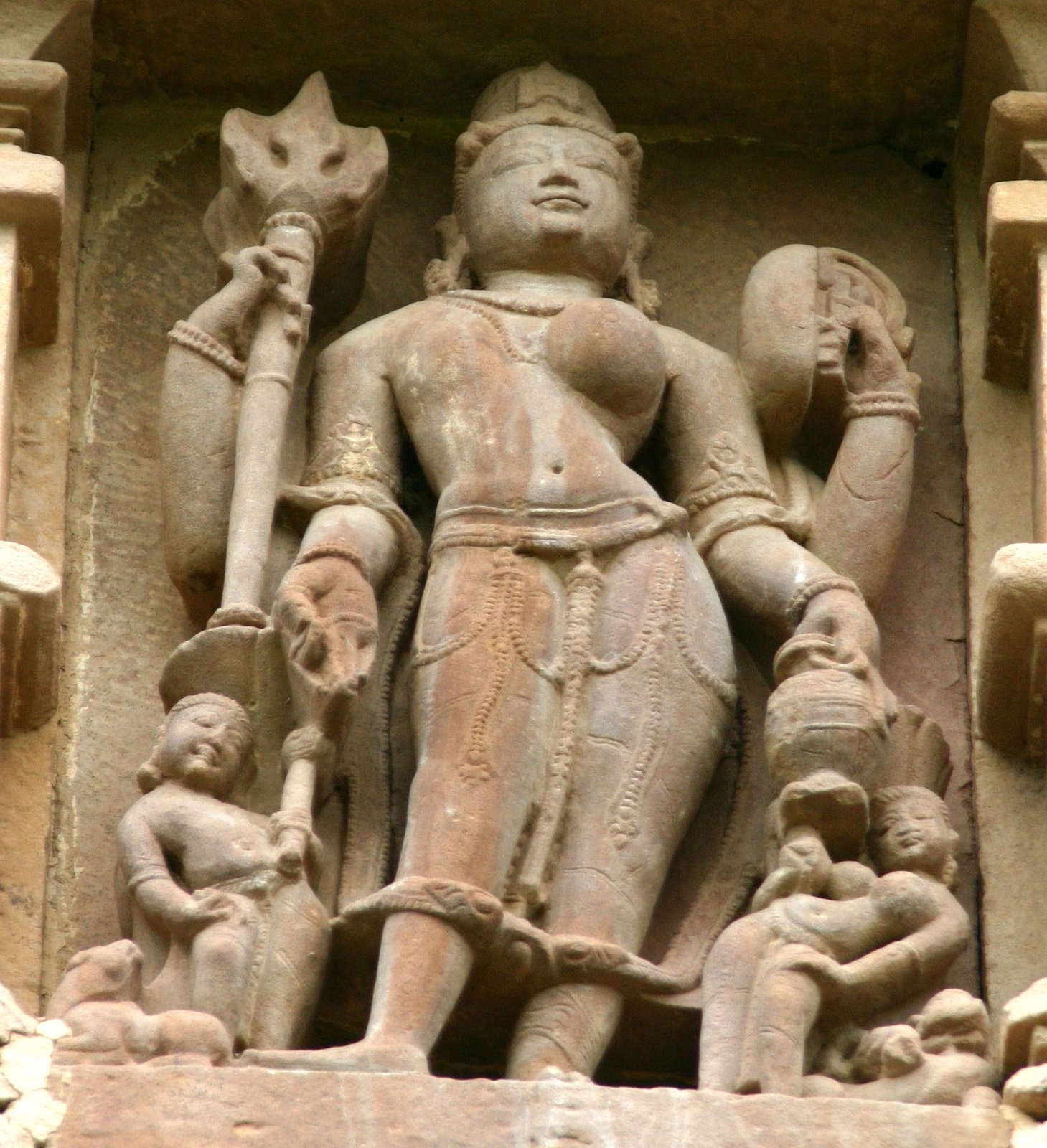
 Ardhanarishvara sculpture, Khajuraho. From Wikipedia, subject to this Creative Commons license

Public discussion about those opposing the Delhi High Court's reading down of Section 377 of the Indian Penal Code has centred around the several self-proclaimed religious groups, astrologers and babas. None of these pious souls have, however, based their arguments on Hindu scriptures or philosophy (but mainly on 'morality'). There's been a lot of foaming at the mouth with arguments against gay sex that are laughable. We haven't heard a single one of these gentlemen (why are the god-women silent?) quote from the Vedas or the Smritis, nor do they cite any Indian philosopher or saint in their support. Net-net, they argue that the High Court judgement offends Indian values and threatens Indian culture.
The sad truth is that like most Indians, we don't know our own religion and culture well enough to be able to make such claims. How many of us are aware about the various schools of Hindu philosophy? Do we even know what is Hinduism, or who is a Hindu? Even the courts have tied themselves into knots over this question. If the pundits who oppose the Delhi High Court ruling were asked to sit for an MA level exam on Indian Philosophy, would any of them secure even pass-grade marks?
On the other hand, there is enough scholarly work produced within the gay community itself by Giti Thadani, Ruth Vanitha, Saleem Kidwai and Ashok Row Kavi, individually, and sometimes in collaboration, to counter the Indian culture argument. Where does one even start to cite examples from our mythology, literature and history. It is a past far richer than Western traditions of homosexuality.
Hindu society's outlook towards gay sex has been at best benign and at worst neutral. The point that in Hindu traditions the atman or soul is free of the common dualities of biological sex and gender needs reiteration. Just as God is neither a 'he' nor a 'she'. Not this, not that. He is beyond concepts and so is the atman. The dualities of gender roles are man-made. What stands between man and God is the sense of self, or ego, which leads to the five vikaars of vanity, anger, greed, attachment and, of course, lust. Tell me where in our scriptures is lust defined as gay lust alone, not heterosexual lust? Much paper and ink has been spared recently to speculate about what India's 'modern' sanyaasi-politician (no, not Ramdev) must have thought about gay sex. Gandhi quite likely would have seen it on a par with heterosexuality, regardless of whether he was himself gay, bisexual or hetero. His ideal was complete celibacy, of body and mind (As the Bible says, even looking upon a woman lustfully is adultery.)
The fact is that in Hinduism there is no compulsion for anything. Gandhi would have certainly opposed the attempt by the self-styled moral brigade to impose their beliefs on the entire country. As we know, he was a great proponent of ahimsa—one of the fundamental principles of ashtanga yoga. Ahimsa is commonly understood as simply meaning non-violence and perhaps vegetarianism, but it stands for much more: love for all creatures; renunciation of not just physical violence but also mental violence; and not imposing your beliefs on anyone. It therefore behoves the 'pundits' that they desist from doing so in the case of gay sex as well.
They lack any moral or religious grounds to oppose the High Court verdict and LGBT people. The less said the better about the morality of the Catholic Church. (Just to remind readers, it is not opposing the Delhi High Court verdict but that hasn't stopped it from bleating about it in the media.) Its turpitude stands exposed—years of sexual abuse of scores of children and women who tried to take refuge in its fold. Judge not lest ye be judged, O Church! You need to set your own house in order before reminding others about Leviticus. Who knows, maybe the fate of Sodom and Gomorrah awaits you. Until then every Catholic ought to bear the cross for the sins of the Church, which they have funded.
The religious opponents of the Delhi High Court decision would have earned our respect for at least being true to themselves had they admitted their antagonism was because of their personal fears and biases, rather than being based on Indian religion and culture. They stand exposed before us as hypocrites and bigots who only know how to hate. They forget the teaching of their own traditions. God is not hate but Truth and Love.

Sunday, March 11, 2012

Film: Memories in March


If you are looking for a quick reco about this film, I'd say go watch it (it's out on discs now). You will definitely be touched by it and want to share it with your friends and loved ones.         


The writer of Memories in March, who is also one of its lead actors, Rituparno Ghosh, is openly queer. More importantly, he is also someone acclaimed globally for his work, especially his sensitive portrayal of a range of human relationships. The movie itself is about perhaps the most important relationship in a gay man’s life, his mother, and her coming to terms with her (dead) son’s gay orientation and the son’s lover (also his boss). The mother is being played by Deepti Naval, who herself has fine performances to her credit and who has recently made her directorial debut with Do Paise Ki Dhoop, Chaar Aane Ki Baarish, whose lead protagonist is supposed to be gay. Naturally, one expects a film that makes you question some long held beliefs about relationships, digs deep to uncover some untouched layers of the human psyche or at least punches you in the guts and turns on the tear faucets albeit without resorting to Bollywood garden-variety melodrama.

The Bollywood trappings are happily absent. Lacking also is the capacity to meet our other expectations fully. The best plus is that one of the main ingredients, which Indian cinema so often seems to care little about, is not missing. There is a story that’s mostly sensible, a plot that’s plausible. For that alone and for making a film that most producers will not even consider, the makers deserve kudos and a hug.

There’s nothing in the film that makes you cringe or angry as a gay man. No wrong or mixed messages about being queer, no resorting to either effeminacy or portrayal of out-of-control gay sex drives to arouse laughter, no lament on the ‘misfortune’ of being queer. Not that you expect such rubbish from Rituparno Ghosh.

From a queer-rights-advocacy perspective, the movie pushes the right buttons, even if not hard enough. The interactions between the mother and son’s lover and the mother and son’s girlfriend address some of the myths that strange straight people still entertain about us in connection with masculinity/femininity, gender roles, conversion, aesthetic abilities, fixation on the sex, and so on.

The performances by the cast may not be award-winning but do not disappoint either. Of the two leads though, Deepti’s is the more convincing act. Rituparno’s trouble with accent and his real life persona serve as a handicap to accept his portrayal of the bereaved lover-cum-creative director. It’s like he wasn’t acting much; just playing himself. Of course it’s quite possible that having been born of Rituparno’s imagination, the character has a mostly autobiographical anchor.

Like some advertising films which hold your attention momentarily, the movie has a sprinkling of sparkling moments, some of which tap the tear ducts, but in sum, the film turns out to be drab. Don’t expect any scintillating scenes between the two protagonists, including the argument that leads to Raima Sen's character outing her deceased friend to the mother. In fact the entire build-up in the plot to the outing has a false ring to it, coming across as an overreaction from the mother, especially from someone who seems to be dealing with the loss of her son so well from the start; although she does verbally express his death to be the worst event in her life. To underline, the sequence of events leading up to the outing seem forced.

As an aside, there are two strange and unnecessary elements in the story. Raima’s character could be interpreted as a gray one, as she uses her dead friend’s contact to land a new job. Maybe the writer or director was being quirky in giving the freaky touch to the watchman character.

For the Indian queer community, this movie is the next important feature film after Onir’s My Brother Nikhil. Sadly, it did not even get that much theatrical viewership on first release in April 2011. However, one hopes that it will find a bigger audience over the years.

The Indian queer community’s war may seem to be cut-and-dried about decriminalisation and winning equal legal rights, but at its core is winning the hearts of people that matter to us like mothers (in Memories in March) and siblings and parents (in My Brother Nikhil) and thus dispelling ignorance and the resulting homophobia of our society at large. The movie may not have as much emotional appeal and intellectual core as we had expected, but its heart is in the right place and beats for us.


Versions of this piece first appeared in Bombay Dost magazine in August 2011 and in Trikone magazine (Winter 2011 issue).

Wednesday, September 28, 2011

Covering the queer spectrum: My new MxM India post

In a new, lengthy post commissioned by MxM India, I argue that the media needs to go beyond the superficial in their coverage of queer issues and offer some pointers. No, 'MxM India' is not shorthand for 'men who have sex with men'. It is all about 'mainstream media' (which is abbreviated similarly to 'MSM'). MxM India is a "360-degree business-to-business media company that plans to empower the media and marketing fraternity with indepth news, information, research and analyses."

Here's a teaser from the post:

There’s little to be happy about the state of journalism today, but this piece will try to remain upbeat and offer constructive comments on coverage of LGBT (or queer issues). The focus is mainly on the English-language media. First, a pat on the back for doing by and large a good job, especially in the editorials department! A lot of the reportage is either by queer and queer-friendly journalists themselves or driven by them.
These journalists are also the most innovative in their approach to queer issues and in touch with the pulse of queer communities despite not being on an ‘official queer beat’— another sign to management why they need diversity and inclusion in their organisation. Having people in your media house from different communities helps you understand them, reach out to the communities and broaden and strengthen your coverage. One editor deserves a special mention here. Aditya Sinha, currently with DNA, launched a weekly ‘Sexualities’ page (it was mainly about queer issues) back in April 2008 when he was with The New Indian Express. The practice continues at DNA, which has a monthly page. Quality may be ultimately important but for marginalised identities this is great exposure in the short run.
This is not to say that there is no homophobia in the media. Of course there is sensational and sleazy reporting (TV9’s “sting” op in Hyderabad; “Central Park a Gay Paradise”: Mid-Day); insensitive, even biased writing (“A baby for gay, deaf, mute couple? It’s cruel”: Deccan Chronicle) and totally muddled, pseudo-scientific horrors as well (“Lesbian? Not quite, say psychiatrists” and “Trapped In Bad-Girl Taboo”: The Times of India). Then, there is the let’s-not-talk-about-it attitude, which is probably true of quite a few publications, but probably nowhere as ingrained as at the Reader’s Digest. However, change is inevitable and so is a debate on queer issues.
What the media needs to do most is to go beyond the superficial, else both reader and writer will be bored! And which reader would like to start their day with a humdrum piece on a Pride parade when there are so many other colourful diversions? There are many interesting queer stories waiting to be told yet. If mainstream newspapers and channels won’t tell these, then the competition will (for instance online news magazines such as FirstPost.com). The White House has a new LGBT liaison but how many people know he is of Indian origin: Gautam Raghavan. Usually, the press goes gaga over desi achievers, even those who want to deny their Indian origins. So isn’t the Gautam Raghavan story worth an interview or at least some column inches? Let’s start with the basic issue though....

Read much more here: http://www.mxmindia.com/2011/09/newswatch-covering-the-queer-spectrum/

Sunday, August 08, 2010

Op-ed in The Bengal Post

I have been too busy and distracted to post here, but every few months I manage to write for Bombay Dost and other publications, because I am driven to do so. I haven't been able to post the last few pieces on this blog but here's the most recent one I wrote for The Bengal Post, a relatively new English language newspaper based in Kolkata, dated 2 July 2010.

The link will take you to a PDF of the Op-ed page -- you can view it in the browser itself, no sign-in or software required.

Please leave your comments on this post or click on one of the buttons below to tell me what you thought about the piece.

It's not a very comprehensive one; there's more to add in this vein sometime soon. Unfortunately it was too late for me to incorporate comments from Ashok Row Kavi, Chairman, Humsafar Trust. Thanks for inputs to Vivek Anand, CEO, Humsafar, and Pallav Patankar, Director of HIV intervention programmes at Humsafar.

Monday, January 05, 2009

No place for fear this year

This is a piece I wrote for the January 2009 issue of Marie Claire India. (I was asked to write about my wish for 2009 for the Indian queer community.) Here's the PDF of the published piece if it interests you.

Last year began on a very sour note for some of us. Barely had we said goodbye to January than the Maharashtra Police orchestrated the drama of busting a gay party, before it could commence, just outside Bombay (in Thane) for the benefit of the TV media. The police officials got their 15 seconds of fame and managed to curry favour with the voyeuristic channels, who in turn got their ‘exclusives’ and grabbed some filthy and some even self-righteous viewers by their eyeballs.
Privacy has traditionally been at a discount in Indian society, with its joint families, and gossipy maids and neighbours. So it is okay for you to party and be featured in full colour, but those of us at society’s margins should get used to the police barging in, breaking up our parties, forcibly outing us and parading us on national television like criminals and freaks? The tamasha sent forth a wave of great fright among closeted gay people around India.
Fear is what we, the people of India, gave ourselves on Independence. Fear of the unknown, fear of the other. Fear that fed on ignorance of the other. Fear of the majority, a majority that is itself fearful of what it chooses to neither understand nor recognise. Fear of a shameful, relic of the British, Section 377 of the Indian Penal Code, a law that makes an adult like me criminal for life if the police can prove I made love with another adult male. This fear nourishes the HIV epidemic among us.
Fear has caused us to forget that we also gave ourselves a constitution that enshrines some human rights and enjoins each one of us to uphold them. So the police can abdicate its duties to protect and fearlessly abuse its powers. And the government can, through its infamous ex Home Minister and his former minions, make perversions of these rights in writing to the Delhi High Court, which is charged with public interest litigation (PIL) to read down the shameful section that strikes fear in closeted hearts.
Freedom from fear should be theme in 2009, continuing from Mumbai’s grand, cosmopolitan-as-a-rainbow march for Queer Azaadi on 16 August, and the June-end debut Pride parades of Delhi and Bangalore (Kolkata’s annual march against homophobia started nine years earlier when just 13 men mapped the city, with the rest of the queer community staying in the shadows).
Freedom to question the assumption of being heterosexual without fear, the man-woman definition of marriage, and the very importance of such a marriage for a queer person. Freedom to love and live with a person of the same sex without fear. Freedom to educate oneself about safer sex and use the services of a health professional as a queer person, without the fear of stigma, neglect and ‘treatment for homosexuality’ that occurs despite prescribed Good Medical Practice and ethics. Freedom to be out at work without fear of harassment or discrimination. Freedom from the fear of being entrapped and blackmailed by a police stooge simply for being gay and closeted. Freedom from hiding in the closet, wearing a mask, using an alias. Freedom from the insecurities that come from being closeted. Freedom to live without fear of losing one’s dignity. Freedom from the fear of being treated as less than equal by the law.
The march towards Freedom from fear will receive a boost if the Delhi High Court makes the bigots in the government apparatus swallow a bitter PIL and champions the human rights in the Indian Constitution. We will cover the rest of the way forward with a little help from each other and each of our families. Waiting for the dawn of a real Happy New Year. Meanwhile, here’s wishing you one!

Tuesday, May 20, 2008

Remembering Tendulkar’s Mitra

Many of you would have noted the death of Padma Bhushan Vijay Tendulkar, playwright, scriptwriter and civil liberties champion (he was also the father of the late Priya ‘Rajani’ Tendulkar). The theatre, film and journalist fraternities have paid rich tributes to him.
Many of these would have made reference to his iconoclasm but omitted any reference to his play, Mitrachi Ghoshta (A Friend’s Story), where the central character is lesbian and the story is about her struggle to cope with her sexual orientation and (as Rohini Hattangady, who played the character, has said) ultimate ‘inevitable’ suicide.
When I saw the Hindi version of the play, Kahani Sumitra Ki, (perhaps it was the late 1990s) staged by Chetan Datar and his theatre group, I thought it was dated and, of course, depressing. I had recently come out then and was, perhaps, more of an idealist then. Still, Tendulkar had the guts to dare to be different.
As I look back now at the play, it’s distressing how the fiction of his play is still a truth for many lesbians even today. The play’s other main character, Bapu, –
“ultimately comes to represent: a homophobic society that keeps its blinders on to naturalize straight relationships as the norm, even if this should lead to a tragic end.”
(Source: Humanities Retooled)
Incidentally, Tendulkar also wrote the screenplay for the Smita Patil-starrer, Umbartha (based on Shanta Nisal’s novel Beghar), which featured a lesbian couple who set themselves afire.
*****
Tendulkar was in his teens and lived in Pune when he became acquainted with ‘Mitra’, the girl on whose life he based Mitrachi Ghoshta. This was in the early 1940s. A classmate of Mitra from college became friends with Tendulkar and would talk about this girl whom the playwright had seen many times before and even seen her performance on stage. The actor friend also told him about Mitra’s affair with another girl which “practically finished her (Mitra’s) life” when it ended.
Tendulkar recounted all this and more in his June 2001 preface to the play’s English translation (by Gowri Ramnarayan), which was published by Oxford University Press. He remembers “the shock waves and confusion” that the story about Mitra’s lesbian affair caused in his young mind. “I had just begun my career in writing then. But what I heard about Mitra did not prompt me to write about her at once. It took some years to surface in the form of a short story. It was written in the mid 50s…. The title was Mitra. It appeared in one of the Diwali annuals in Marathi, and was appreciated.”
A few years later, when he had moved to Mumbai, Mitra was again on his mind. By then he had seen her living as a spinster in Pune. Tendulkar said, “I was an adult then, with enough knowledge of the same-sex world which existed around me but was still considered a taboo. The thought of writing and staging a play on such a relationship was out of the question. Yet the play Mitra materialized.”
It was staged only a few times by some young actors. The play was “hated by the women and sneered at by the men in the audience”.

*****
Mitra is widely acknowledged as the first Marathi play (and perhaps even the first Indian play) on same-sex relations. Tendulkar, however, emphasized that it was merely about “a young boy touching twenty, inexperienced in many human ways, and still a virgin when he comes in contact with Mitra. He feels a deep attachment for her after the first feelings of wonder, and gets involved with her until she destroys herself.”
In a note to the translation, Hattangady, said that, “Sumitra, that is Mitra, being ‘different’ is the core (essence) of the play.” Much before Hattangady played Sumitra, she had read the script “and liked it. The subject was new and different — in the first instance, almost unpalatable.” For Hattangady, it was “a chance, and a challenge” to play “such a character (Nothing like this had been tackled before in India, on stage or the screen, way back in 1980.)” Tendulkar greenlighted the performance only after he had seen it himself because “the subject could be easily misinterpreted.”
“…Even when we performed it, it was labeled as a ‘bold subject’ or ‘what sort of subject is it?’ It did not run too well as a commercial play, but those who saw our performance, still remember it as an ‘unforgettable’ experience.”
*****
As an aside, Hattangady wrote that she read up on homosexuality “to get a better idea… and came to a broad understanding that these attractions are of two kinds, one based on circumstances and two, on physical hormonal imbalance. Mitra belongs to the second category.” Surprising that even in 2001 she harbored such out of date notions about homosexuality. But Hattangady also uses the words ‘abnormality’ and ‘different’ in quotes in the note.
Another incident she has recounted shows her sensitive nature: “To go for the rehearsals, I had to travel by local train in Mumbai…. One day while traveling, a eunuch boarded the train. There was not much of a mad rush. The train stopped at the next station. A few ladies got down and a few entered. They looked strangely at the eunuch. I was watching them and the ‘look’ on their faces. Isn’t Mitra also ‘different’? That look on their faces said so many things to me. From that day onwards, Mitra came closer to me still.”

Monday, May 19, 2008

My own private IDAHO

"If you wait for someone to give you freedom, that’s charity, permission — not freedom.”

Christy Jayanthi Malar (38) and Rukmani (40) decided there was no other way but death to get their freedom. At the stroke of midnight that marked the beginning of the International Day Against Homophobia, died hugging each other. They lighted their kerosene soaked bodies and escaped the harassment and abuse of society — a society that could only see their physical relationship but not their love for each other.

Christy and Rukmani, both from underprivileged, rural backgrounds, had known each other since school. In the intervening years, they had got married. They met again 10 years ago. Rukmani had been forced by her relatives to move from place to place to keep her away from Christy and was even married off a second time after she separated from her first husband. All because Rukmani and Christy’s was an “unusual relationship” that caused “much consternation” to their families.

On the day before their death they were publicly humiliated and abused—just for loving each other. In fact, not for just loving each other but because they were of the same gender. It wasn’t their caste, class, religion, age—it was because the couple was of the same gender. Society found that so unacceptable that they wished them dead.

*********

Would you wish your son were never born because he turned out to be gay? I know one set of parents who have uttered these words over and over again for their only son. My ex-boyfriend, H. Yes, there still live people like that right here in our midst, in urban, middle class Mumbai, forget rural Tamil Nadu.

If some parents or relatives think their ideas of caste hierarchy, normality and so-called respectable society are more important than their child’s or brother’s happiness or choice of life partner (or his/her gender), then they are anyway not worth having as parents or relatives. I don’t say abandon them—try to make them see your viewpoint, but if that doesn’t help, do your filial duty, and then leave it to destiny. If you both are lucky, then with time they will come around to your viewpoint. If not, then say to yourself that your karmic account with them is settled and over; you owe nothing more to each other. (I believe in karma and transmigration.)

As children, we don’t owe an extra favor to our parents—and certainly not the favor of getting married to a partner of their choice—just for raising us. Even animals and birds nurture and love their offspring. Probably, their love is even more selfless than the love of human parents because birds and animals don’t expect anything in return from their young — their offspring don’t even look after them!

I believe it’s better one maintain a relationship only with those who respect you for what you are and love you unconditionally. My ex-bf’s parents are traditional Maharashtrian Brahmins, so they would believe in karma and transmigration too. I hope they and parents such as these get their just deserts and remain childless in their coming births. They do not deserve to be parents.

*************

I do not blame the parents alone. It’s people like my ex-bf who cave into the emotional blackmailing and pressure. Or people such as Rukmani and Christy who may have inspired other women like Deepa to come out and speak up, but in their death they have also become negative role models. I fear more suicides, especially in a state such as Kerala that’s notorious for lesbian suicide pacts. (So much for being a state that is more literate and has traditionally favored women.)

Deepa is one of the few women who dare to speak publicly about her sexual orientation. "We tend to avoid talking about certain issues, which other people find uncomfortable to face," she says. "It just makes it tougher for other women." She believes that talking about the issue openly is the way to get people to understand the issue.

Being gay is nothing to be ashamed of, nothing wrong. This is the conviction gay and lesbian people should have, instead of grasping on to a false sense of honor and pride in belonging to so-called normal society. If some people have misconceptions about sexuality, it is even more important that we as gay people speak up and correct them. We can’t afford to be stuck in this vicious cycle: you feel you cannot come out because you are afraid to face people’s negative reactions, and people react negatively because they don’t have enough information about homosexuality. It’s our own responsibility to break the cycle instead of lamenting about it. How can you sit around waiting for change to happen automatically or someone else to bring it about? If you don’t speak up, you create your own hell.

*************

And the only respect you’ll get from your loved ones will be after your suicide. They’ll cremate you and your lover together, and they will pretend shock and shed crocodile tears. But as long as you are live and you let them push you around, you will be not allowed to be with the one you love. And after your death, the state will protect your murderous kin. So the Indian Penal Code applies to us but not to them.

A senior police officer said action would not be taken against the relatives. "We can't say the relatives pushed the women into suicide. They might have verbally abused them, but that was to bring them back to normal life," a senior police officer said.

And moreover, the state shall argue in the courts that being gay consenting adults, you should be deprived of the fundamental rights granted to every Indian by the Constitution. (see entry dated Friday, September 26, 2003 on http://queerindia.rediffblogs.com) I say go ahead and ‘break’ such unfair laws. Damn the state, damn society. Long live, we the people.

*************

The quote at the beginning of this post if paraphrased from the movie, Γ€ cause d'un garΓ§on.

Sunday, May 04, 2008

An interview with Bindumadhav Khire

A short version of this interview was published in the The New Indian Express' Zeitgest magazine on Saturday, 3 May 2008.

Bindumadhav Khire is a techie who gave up his career in the US to return to India and got involved with issues close to his heart. Based in his native Pune ever since his return, Bindu is a gay rights and AIDS activist. He has been speaking about queer issues at various forums in India, particularly in his city. In 2005, Bindu donned the hat of a Marathi writer with his novel, 'Partner'. NGOs working in the field of sexuality have been using 'Partner' for sensitisation. Bindu’s latest book, 'Indradhanu: Samalaingikateche Vividh Ranga' (Rainbow: the various hues of homosexuality), discusses different aspects of homosexuality from an Indian perspective. 'Indradhanu' promises to be of value to people from various backgrounds, especially gay and bisexual youth struggling with their sexual orientation, and their parents and friends; people from the medical fraternity; NGOs working in related fields; policy makers; corporates; and the media. Bindu is currently working on another Marathi book, ‘A, B, C of Sexuality’. Excerpts from an email interview with Bindumadhav Khire:

Being gay should be a non-issue in an ideal world. What were the milestones, and highs and lows till you reached a point of self-acceptance, when you could acknowledge your ‘gayness’ to all without it becoming a confessional?

I went through denial (when I hoped I would change), depression (I thought of committing suicide) and hate (towards God for making me gay). I was shy, very poor in communication, had zero self-esteem. I was married and got divorced a year later. When I was in the US, I got in touch with San Francisco-based Trikone (an LGBT organisation) and that’s how I started becoming comfortable with my sexuality. I volunteered with them and became part of the 'Trikone family'. I became the assistant publisher and then publisher of ‘Trikone’, their quarterly magazine. As I became more comfortable with my sexuality, I started feeling suffocated and felt that I had to come out. I first came out to a friend at the workplace. Every coming out then was an adventure. I participated in the San Francisco Gay Pride Parade, the San Jose Gay Pride Parade…. When I came back to India, I came out to my parents. This was the most difficult part. They were shocked. It's taken them time to cope with my being gay. My mother's been just great. My experiences in the US and achieving financially stability went a long way in helping me so that now I don’t give a damn what neighbours, friends and strangers feel about me.

What made you give up a lucrative career as a software engineer in the US to return to Pune much before NRI homecomings became a trend? You could have stayed there and been involved with causes close to your heart in the local community?

Once I was comfortable with my sexuality, I saw no reason to file for a Green Card and stay in the US. I also felt guilty about having got married. I wanted to come out and expiate that guilt. Also, despite having stayed in the US for four years and loving every moment of it, I did feel a bit like a fish out of water. I am more comfortable here (in Pune).

How much did you have to educate yourself so to speak about the work you are doing now, and how did you do it?

A lot. A lot of reading and learning had to be done. Luckily, I received much help from some outstanding people like Dr. Raman Gangakhedkar (he taught me pre- and post-test counselling and related ethical issues), Dr. Vijay Thakur (he taught me the principles of befriending and the basics of running a helpline), Dr. Bhooshan Shukla (he gave me info on sexuality), Sunita Wahi gave me a lot of books to read.... I could go on and on. Also, I had to do a lot of soul-searching on each of these issues… especially the ethical part.

What's the gay scene like in Pune, which is considered quite conservative? How visible is the community? Despite its young student and BPO-KPO communities, is Pune still like Mumbai of the late 1980s when the only community activity in the city was one gay disco a week and one evening of cruising in a park?

The community is not visible at all. The important difference from Mumbai of the 1980s is the advent of the internet. The number of cruising sites has increased as has blackmail and harassment. In the medical field, not much change though – most psychiatrists are either homophobic or hypocritical. They are our biggest enemies.

You recently said that for every one gay person in Pune who has helped you, there have been 10 heterosexuals who gave you their support. Why do you feel our community itself is ignoring you? What is the rationale for their apathy?

This apathy did come as a surprise. I think most closeted gay people hate anyone who has fought and found his freedom; they are jealous of anyone who escapes from hypocrisy. But I don’t blame them. At one time I used to hate Ashok Row Kavi for the same reason.

What are the top three issues you think are hurting gay people in India and what's your practical prescription for these?

The biggest problem is either ignorance or apathy in the community about the issue of Section 377 (of the Indian Penal Code). I have come across many gay men who don’t even know it's illegal for them to have sex. Here, of course, we activists are to be blamed. We have done a shoddy job of highlighting the 377 issue. It's shameful, the kind of third-rate people who call themselves gay activists these days. Sometimes I think the gay movement will go down the drain the way women's lib in India has failed miserably. The other serious problem is that for many who know about 377 don’t care whether it stays or goes. I can't figure that one out. How could anyone not care whether that ugly piece of law is erased or not, I don’t know. Is it because many of us have decided to live a double life anyway?

Number two: how many of us have taken the time to seriously become comfortable with our sexuality and gain basic knowledge on alternate sexuality? So many of us spend the whole night finding new partners on the net or at (cruising) sites, and spend the next day hating ourselves for it. We don’t really give a damn about our mental health. That’s sad because instead of accepting our sexuality as beautiful and our love as pure, we spend our entire life burning in self-hate.

Lastly, despite knowing the high incidence of HIV in the gay community, many of us still continue to have sex without condoms. We refuse to become mature and take control of our life. I can provide you information and condoms but I can't control HIV infection unless YOU care about yourself.


Activism and writing have always had a special bond? Did the need to write arise from there for you?

I think so. I used to feel ashamed to tell gays and 'straights' that "no, sorry but there is no book out there in Marathi that discusses gay issues". There was also another reason. In the US I had many gay friends to talk to. In Pune, I felt very suffocated as there were few people I could talk to about my issues and feelings. I think ‘Partner’ was the outcome of these two reasons. The HIV/AIDS helpline manual came from the experience of running my own helpline and helping set-up and supervise another HIV/AIDS helpline in Pune. Again, there was nothing in Marathi on the hows of setting up such a helpline. Writing has become a need for me… Also, instead of repeating the same things over and over, it's better to put these down so that people can have access to answers long after I have (mentally) burnt out.

As an activist and former techie, do u feel an acute lack of online gay-themed literature in Marathi and other Indian languages?

Yes, definitely. The Indian gay movement's biggest failure is not being able to present its views to the common man in a language he understands. All we have is people who write in English, which is read by a negligible percentage of the population. Very few Indians are comfortable with English. It is also a relatively ‘safe’ language; there is a lesser chance of an aggressive reaction from people if the medium is English. It's not that English should not be used to voice our issues but by using only this language we ensure that gay issues remain Western or elitist subjects and indirectly help in propagating the stereotype that ‘gayness’ is a Western import.

How do Marathi press, cinema and theatre portray gay issues? Do they mainly demonise us or invisibilise us?

Newspapers ignore these issues. But the gay Marathi-speaking community is to be blamed too. How many of them write on gay issues? Is it not our duty to utilise the free press that we have, to talk about our issues? As far as cinema is concerned, except for Amol Palekar's 'Thang' (Quest) there is no Marathi feature film that has dealt with gay issues. Again, the gay community needs to make gay films. I hate this stand of waiting for someone else to come and fight our battles – is it a cultural thing with us Indians?

Do plays, books like yours and movies like 'Thang' generate either heat and dust or any debate in the Maharashtrian community?

Very few people want to see facets of life that make them uncomfortable. So they either choose to ignore (partly because they are in denial) or they get all worked up about it and froth at the mouth. There is no sincere attempt to understand issues related to homosexuality – because most people don’t want to. Still, it is important we keep on voicing our issues through various media. For those few who want to become more human, these resources should be available in Indian languages.

Disclosure: This writer is associated with Bindumadhav Khire's NGO for gays and men-who-have-sex-with men, Samapathik Trust, Pune (samapathik@hotmail.com. Helpline: (0) 9890744677 (7 pm to 8 pm – Mondays only)

Thursday, May 01, 2008

Today is… Labour Day, of course, but also RSS Awareness Day

Returning to blogging after a year on Labour Day is a good sign, and I hope I can sustain blogging this time – without much labour. :-) For those of you unfamiliar with ‘RSS’, it does not stand for Rashtriya Swayamsevak Sangh but ‘Really Simple Syndication’.

What does RSS ? What does it do?

Here’s a quote from RSSDay.org:

“RSS is a format used to deliver information from websites and pages that get updated regularly. An RSS document (which is called feed) contains either a summary or the full content from a website.

The main benefit of RSS is that it enables people to stay connected with their favorite websites without having to visit them. Once you subscribe to a particular RSS feed, you will automatically receive updates from the website that publishes the feed, whenever they release new content.”

If you like to visit several web sites or blogs regularly, RSS can be a blessing. You don’t need to remember which websites to check, you’ll know automatically which ones are updated, you can read them at your leisure and you can even mark them for reading again later. You can skip parts of a post until you get to the next interesting bit. My RSS reader even shows videos and photos within each item. It’s like being on the web site without any extra mouse clicks or typing in the URL in your browser.

And if you are afraid you will miss out on others comments on a blog post, one can even subscribe to the feed for comments.

My feed reader

If you use Google Reader to subscribe to your favourite feeds, there’s more: you can login to Google Reader from any PC or mobile (of course, you need a Google/Gmail account, a browser and internet access), and you can share your favourites with friends and see what they are sharing with you. If any of your friends on Google Talk are using Reader and sharing items, they'll show up in the Google Reader sidebar under Friends' shared items.

I use Google Reader daily though I first started using Blog Lines, another popular RSS reader. I still have a Blog Lines account but I have switched to Google Reader only because with Google Reader I don’t need to login to yet another web site – when I am logged into my Gmail, I can open Google Reader with just click.

One gripe though – some sites and blogs only publish their subject/headline or the first few lines of the post. So if I feel I need to read the entire post, I need to click on the post in my reader to visit the site – and it may not turn out to be worth the effort.

To learn more about RSS feeds and how to subscribe, check out RSSDay.org. For more about feeds and to ‘burn’ (publish) the feed for your own web site or blog, look at FeedBurner Help Center’s Feed 101 page.