Saturday, March 17, 2012

In the name of God


A version of this piece appeared in Bombay Dost magazine in August 2011. The Supreme Court of India is currently hearing arguments against the Delhi High Court's decision to read down Section 377 of the Indian Penal Code.  
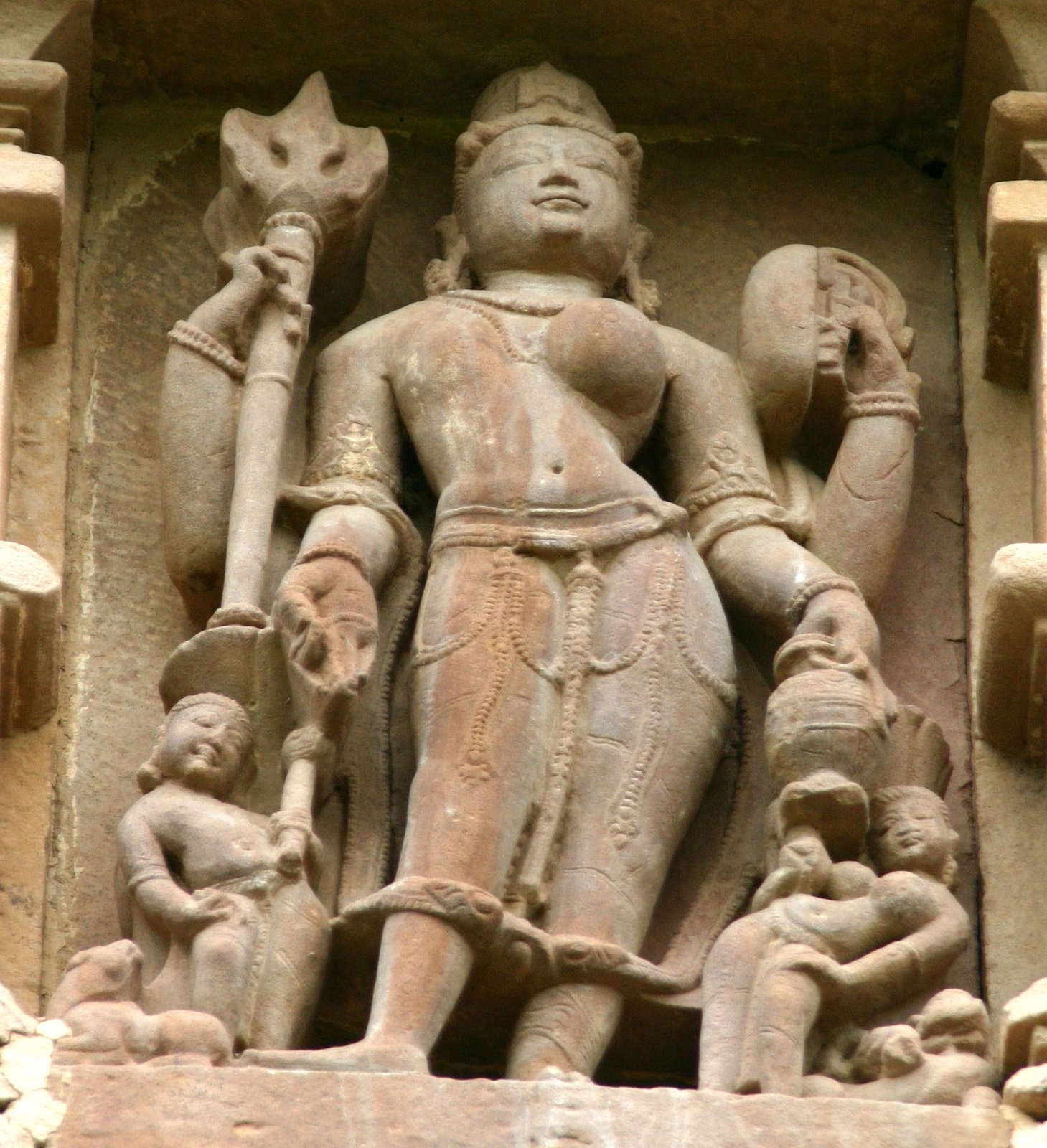
 Ardhanarishvara sculpture, Khajuraho. From Wikipedia, subject to this Creative Commons license

Public discussion about those opposing the Delhi High Court's reading down of Section 377 of the Indian Penal Code has centred around the several self-proclaimed religious groups, astrologers and babas. None of these pious souls have, however, based their arguments on Hindu scriptures or philosophy (but mainly on 'morality'). There's been a lot of foaming at the mouth with arguments against gay sex that are laughable. We haven't heard a single one of these gentlemen (why are the god-women silent?) quote from the Vedas or the Smritis, nor do they cite any Indian philosopher or saint in their support. Net-net, they argue that the High Court judgement offends Indian values and threatens Indian culture.
The sad truth is that like most Indians, we don't know our own religion and culture well enough to be able to make such claims. How many of us are aware about the various schools of Hindu philosophy? Do we even know what is Hinduism, or who is a Hindu? Even the courts have tied themselves into knots over this question. If the pundits who oppose the Delhi High Court ruling were asked to sit for an MA level exam on Indian Philosophy, would any of them secure even pass-grade marks?
On the other hand, there is enough scholarly work produced within the gay community itself by Giti Thadani, Ruth Vanitha, Saleem Kidwai and Ashok Row Kavi, individually, and sometimes in collaboration, to counter the Indian culture argument. Where does one even start to cite examples from our mythology, literature and history. It is a past far richer than Western traditions of homosexuality.
Hindu society's outlook towards gay sex has been at best benign and at worst neutral. The point that in Hindu traditions the atman or soul is free of the common dualities of biological sex and gender needs reiteration. Just as God is neither a 'he' nor a 'she'. Not this, not that. He is beyond concepts and so is the atman. The dualities of gender roles are man-made. What stands between man and God is the sense of self, or ego, which leads to the five vikaars of vanity, anger, greed, attachment and, of course, lust. Tell me where in our scriptures is lust defined as gay lust alone, not heterosexual lust? Much paper and ink has been spared recently to speculate about what India's 'modern' sanyaasi-politician (no, not Ramdev) must have thought about gay sex. Gandhi quite likely would have seen it on a par with heterosexuality, regardless of whether he was himself gay, bisexual or hetero. His ideal was complete celibacy, of body and mind (As the Bible says, even looking upon a woman lustfully is adultery.)
The fact is that in Hinduism there is no compulsion for anything. Gandhi would have certainly opposed the attempt by the self-styled moral brigade to impose their beliefs on the entire country. As we know, he was a great proponent of ahimsa—one of the fundamental principles of ashtanga yoga. Ahimsa is commonly understood as simply meaning non-violence and perhaps vegetarianism, but it stands for much more: love for all creatures; renunciation of not just physical violence but also mental violence; and not imposing your beliefs on anyone. It therefore behoves the 'pundits' that they desist from doing so in the case of gay sex as well.
They lack any moral or religious grounds to oppose the High Court verdict and LGBT people. The less said the better about the morality of the Catholic Church. (Just to remind readers, it is not opposing the Delhi High Court verdict but that hasn't stopped it from bleating about it in the media.) Its turpitude stands exposed—years of sexual abuse of scores of children and women who tried to take refuge in its fold. Judge not lest ye be judged, O Church! You need to set your own house in order before reminding others about Leviticus. Who knows, maybe the fate of Sodom and Gomorrah awaits you. Until then every Catholic ought to bear the cross for the sins of the Church, which they have funded.
The religious opponents of the Delhi High Court decision would have earned our respect for at least being true to themselves had they admitted their antagonism was because of their personal fears and biases, rather than being based on Indian religion and culture. They stand exposed before us as hypocrites and bigots who only know how to hate. They forget the teaching of their own traditions. God is not hate but Truth and Love.

Sunday, March 11, 2012

Film: Memories in March


If you are looking for a quick reco about this film, I'd say go watch it (it's out on discs now). You will definitely be touched by it and want to share it with your friends and loved ones.         


The writer of Memories in March, who is also one of its lead actors, Rituparno Ghosh, is openly queer. More importantly, he is also someone acclaimed globally for his work, especially his sensitive portrayal of a range of human relationships. The movie itself is about perhaps the most important relationship in a gay man’s life, his mother, and her coming to terms with her (dead) son’s gay orientation and the son’s lover (also his boss). The mother is being played by Deepti Naval, who herself has fine performances to her credit and who has recently made her directorial debut with Do Paise Ki Dhoop, Chaar Aane Ki Baarish, whose lead protagonist is supposed to be gay. Naturally, one expects a film that makes you question some long held beliefs about relationships, digs deep to uncover some untouched layers of the human psyche or at least punches you in the guts and turns on the tear faucets albeit without resorting to Bollywood garden-variety melodrama.

The Bollywood trappings are happily absent. Lacking also is the capacity to meet our other expectations fully. The best plus is that one of the main ingredients, which Indian cinema so often seems to care little about, is not missing. There is a story that’s mostly sensible, a plot that’s plausible. For that alone and for making a film that most producers will not even consider, the makers deserve kudos and a hug.

There’s nothing in the film that makes you cringe or angry as a gay man. No wrong or mixed messages about being queer, no resorting to either effeminacy or portrayal of out-of-control gay sex drives to arouse laughter, no lament on the ‘misfortune’ of being queer. Not that you expect such rubbish from Rituparno Ghosh.

From a queer-rights-advocacy perspective, the movie pushes the right buttons, even if not hard enough. The interactions between the mother and son’s lover and the mother and son’s girlfriend address some of the myths that strange straight people still entertain about us in connection with masculinity/femininity, gender roles, conversion, aesthetic abilities, fixation on the sex, and so on.

The performances by the cast may not be award-winning but do not disappoint either. Of the two leads though, Deepti’s is the more convincing act. Rituparno’s trouble with accent and his real life persona serve as a handicap to accept his portrayal of the bereaved lover-cum-creative director. It’s like he wasn’t acting much; just playing himself. Of course it’s quite possible that having been born of Rituparno’s imagination, the character has a mostly autobiographical anchor.

Like some advertising films which hold your attention momentarily, the movie has a sprinkling of sparkling moments, some of which tap the tear ducts, but in sum, the film turns out to be drab. Don’t expect any scintillating scenes between the two protagonists, including the argument that leads to Raima Sen's character outing her deceased friend to the mother. In fact the entire build-up in the plot to the outing has a false ring to it, coming across as an overreaction from the mother, especially from someone who seems to be dealing with the loss of her son so well from the start; although she does verbally express his death to be the worst event in her life. To underline, the sequence of events leading up to the outing seem forced.

As an aside, there are two strange and unnecessary elements in the story. Raima’s character could be interpreted as a gray one, as she uses her dead friend’s contact to land a new job. Maybe the writer or director was being quirky in giving the freaky touch to the watchman character.

For the Indian queer community, this movie is the next important feature film after Onir’s My Brother Nikhil. Sadly, it did not even get that much theatrical viewership on first release in April 2011. However, one hopes that it will find a bigger audience over the years.

The Indian queer community’s war may seem to be cut-and-dried about decriminalisation and winning equal legal rights, but at its core is winning the hearts of people that matter to us like mothers (in Memories in March) and siblings and parents (in My Brother Nikhil) and thus dispelling ignorance and the resulting homophobia of our society at large. The movie may not have as much emotional appeal and intellectual core as we had expected, but its heart is in the right place and beats for us.


Versions of this piece first appeared in Bombay Dost magazine in August 2011 and in Trikone magazine (Winter 2011 issue).

Wednesday, September 28, 2011

Covering the queer spectrum: My new MxM India post

In a new, lengthy post commissioned by MxM India, I argue that the media needs to go beyond the superficial in their coverage of queer issues and offer some pointers. No, 'MxM India' is not shorthand for 'men who have sex with men'. It is all about 'mainstream media' (which is abbreviated similarly to 'MSM'). MxM India is a "360-degree business-to-business media company that plans to empower the media and marketing fraternity with indepth news, information, research and analyses."

Here's a teaser from the post:

There’s little to be happy about the state of journalism today, but this piece will try to remain upbeat and offer constructive comments on coverage of LGBT (or queer issues). The focus is mainly on the English-language media. First, a pat on the back for doing by and large a good job, especially in the editorials department! A lot of the reportage is either by queer and queer-friendly journalists themselves or driven by them.
These journalists are also the most innovative in their approach to queer issues and in touch with the pulse of queer communities despite not being on an ‘official queer beat’— another sign to management why they need diversity and inclusion in their organisation. Having people in your media house from different communities helps you understand them, reach out to the communities and broaden and strengthen your coverage. One editor deserves a special mention here. Aditya Sinha, currently with DNA, launched a weekly ‘Sexualities’ page (it was mainly about queer issues) back in April 2008 when he was with The New Indian Express. The practice continues at DNA, which has a monthly page. Quality may be ultimately important but for marginalised identities this is great exposure in the short run.
This is not to say that there is no homophobia in the media. Of course there is sensational and sleazy reporting (TV9’s “sting” op in Hyderabad; “Central Park a Gay Paradise”: Mid-Day); insensitive, even biased writing (“A baby for gay, deaf, mute couple? It’s cruel”: Deccan Chronicle) and totally muddled, pseudo-scientific horrors as well (“Lesbian? Not quite, say psychiatrists” and “Trapped In Bad-Girl Taboo”: The Times of India). Then, there is the let’s-not-talk-about-it attitude, which is probably true of quite a few publications, but probably nowhere as ingrained as at the Reader’s Digest. However, change is inevitable and so is a debate on queer issues.
What the media needs to do most is to go beyond the superficial, else both reader and writer will be bored! And which reader would like to start their day with a humdrum piece on a Pride parade when there are so many other colourful diversions? There are many interesting queer stories waiting to be told yet. If mainstream newspapers and channels won’t tell these, then the competition will (for instance online news magazines such as FirstPost.com). The White House has a new LGBT liaison but how many people know he is of Indian origin: Gautam Raghavan. Usually, the press goes gaga over desi achievers, even those who want to deny their Indian origins. So isn’t the Gautam Raghavan story worth an interview or at least some column inches? Let’s start with the basic issue though....

Read much more here: http://www.mxmindia.com/2011/09/newswatch-covering-the-queer-spectrum/

Sunday, August 08, 2010

Op-ed in The Bengal Post

I have been too busy and distracted to post here, but every few months I manage to write for Bombay Dost and other publications, because I am driven to do so. I haven't been able to post the last few pieces on this blog but here's the most recent one I wrote for The Bengal Post, a relatively new English language newspaper based in Kolkata, dated 2 July 2010.

The link will take you to a PDF of the Op-ed page -- you can view it in the browser itself, no sign-in or software required.

Please leave your comments on this post or click on one of the buttons below to tell me what you thought about the piece.

It's not a very comprehensive one; there's more to add in this vein sometime soon. Unfortunately it was too late for me to incorporate comments from Ashok Row Kavi, Chairman, Humsafar Trust. Thanks for inputs to Vivek Anand, CEO, Humsafar, and Pallav Patankar, Director of HIV intervention programmes at Humsafar.

Monday, January 05, 2009

No place for fear this year

This is a piece I wrote for the January 2009 issue of Marie Claire India. (I was asked to write about my wish for 2009 for the Indian queer community.) Here's the PDF of the published piece if it interests you.

Last year began on a very sour note for some of us. Barely had we said goodbye to January than the Maharashtra Police orchestrated the drama of busting a gay party, before it could commence, just outside Bombay (in Thane) for the benefit of the TV media. The police officials got their 15 seconds of fame and managed to curry favour with the voyeuristic channels, who in turn got their ‘exclusives’ and grabbed some filthy and some even self-righteous viewers by their eyeballs.
Privacy has traditionally been at a discount in Indian society, with its joint families, and gossipy maids and neighbours. So it is okay for you to party and be featured in full colour, but those of us at society’s margins should get used to the police barging in, breaking up our parties, forcibly outing us and parading us on national television like criminals and freaks? The tamasha sent forth a wave of great fright among closeted gay people around India.
Fear is what we, the people of India, gave ourselves on Independence. Fear of the unknown, fear of the other. Fear that fed on ignorance of the other. Fear of the majority, a majority that is itself fearful of what it chooses to neither understand nor recognise. Fear of a shameful, relic of the British, Section 377 of the Indian Penal Code, a law that makes an adult like me criminal for life if the police can prove I made love with another adult male. This fear nourishes the HIV epidemic among us.
Fear has caused us to forget that we also gave ourselves a constitution that enshrines some human rights and enjoins each one of us to uphold them. So the police can abdicate its duties to protect and fearlessly abuse its powers. And the government can, through its infamous ex Home Minister and his former minions, make perversions of these rights in writing to the Delhi High Court, which is charged with public interest litigation (PIL) to read down the shameful section that strikes fear in closeted hearts.
Freedom from fear should be theme in 2009, continuing from Mumbai’s grand, cosmopolitan-as-a-rainbow march for Queer Azaadi on 16 August, and the June-end debut Pride parades of Delhi and Bangalore (Kolkata’s annual march against homophobia started nine years earlier when just 13 men mapped the city, with the rest of the queer community staying in the shadows).
Freedom to question the assumption of being heterosexual without fear, the man-woman definition of marriage, and the very importance of such a marriage for a queer person. Freedom to love and live with a person of the same sex without fear. Freedom to educate oneself about safer sex and use the services of a health professional as a queer person, without the fear of stigma, neglect and ‘treatment for homosexuality’ that occurs despite prescribed Good Medical Practice and ethics. Freedom to be out at work without fear of harassment or discrimination. Freedom from the fear of being entrapped and blackmailed by a police stooge simply for being gay and closeted. Freedom from hiding in the closet, wearing a mask, using an alias. Freedom from the insecurities that come from being closeted. Freedom to live without fear of losing one’s dignity. Freedom from the fear of being treated as less than equal by the law.
The march towards Freedom from fear will receive a boost if the Delhi High Court makes the bigots in the government apparatus swallow a bitter PIL and champions the human rights in the Indian Constitution. We will cover the rest of the way forward with a little help from each other and each of our families. Waiting for the dawn of a real Happy New Year. Meanwhile, here’s wishing you one!