Showing posts with label Hinduism. Show all posts

Monday, February 08, 2016

Under State control

A piece I wrote for The Hindu's Mumbai edition... it was published the day after the Supreme Court held an open court hearing on whether to consider the curative petitions against its own verdict that had upheld Section 377 of the Indian Penal Code.

http://www.thehindu.com/news/cities/mumbai/news/nitin-karani-when-the-state-makes-choices-on-our-behalf/article8187623.ece

There were three sets of people with a very keen eye on the proceedings in Supreme Court in the matter of the curative: thousands of LGBT people and their allies; some legal eagles and the press; and a miniscule minority of opponents, mostly ‘religious’. This last group feels that not only must it oppose homosexuality within its own private sphere but also impose its world view on everyone else through the might of the State, even to the extent of punishing consenting adults with up to 10 years of time in jail. Compare this with maximum punishment of a ritual bath for a homosexual act (that too only for the priestly class) prescribed by the Manu Smriti.

We can debate the authenticity of the Manu Smriti and its importance, but it contrasts with the extreme position that the opponents, including the State, have taken by wanting to retain Section 377 in the Indian Penal Code (IPC). By now it has been argued often enough that Sec 377 is a law based on Victorian morality, which was itself rooted in the Bible, and that much of the IPC is a relic of the British Raj days.

The larger point here is illustrated in the fable of the Arab traveller and the camel, who first begged to insert its nose into the tent and then other parts of his body, with the Arab finally thrown out of his own tent. The State entered into our bedrooms with the IPC and now it refuses to get out. It has been decades since the State’s right to interfere in our choice of partners — sexual and marital — is being contested but it refuses to yield. The Arab traveller remains at the mercy of the camel when it should be the other way round. We, the people, have allowed the State to take control of our lives increasingly, to the extent that we have forgotten the liberties that were ours naturally. In every sphere of our life, the State limits and regulates both our economic, social and personal choices.

This did not happen overnight. It happened gradually, like in the fable, but it now seems pretty irreversible. In fact, we, the people, give the State more power every day over ourselves, even to make choices on our behalf each time we demand that the State perform a function other than the minimum required for us to exercise our choices freely, without fear to our life and property.

Most of us, wherever we may place ourselves on the political spectrum, only pay lip service to liberty, equality and freedom of expression; we do not know what we ask for when we demand that the State enact new statutes and more stringent laws (when it does not even execute existing laws fairly and efficiently, allowing scope for misuse), instead of reducing them to the minimum and simplifying the rest. This can be seen in every area of our life, from ‘net neutrality’ and use of social media to fiscal and monetary policies, and the selling and buying of our own assets. Governments, meanwhile, are only interested in increasing their power over the people. So there will be some noises about liberalisation and minimum government, but every government’s actions are quite the opposite in the guise of maximum governance and ‘social justice.’

What social justice is served by keeping Section 377 in the IPC? What does the State achieve by either punishing or the threat of punishing adults for a ‘crime’ without victims? Did social order and public morality breakdown when the Delhi High Court re-legalised ‘gay sex’ (given it was never a crime pre-IPC)? Did homosexuality spread across the nation like a newly-discovered virus and threaten nationhood in addition to heterosexual ‘manhood’?

The answers to all of these questions are staring at us but, no, the courts and the government will take their time to exercise their wisdom and decide what is good or bad for we, the people. Until then, far from enjoying the liberties and benefits available to heterosexual couples, we lesbian, gay and bisexual and even transgender people must pretend we do not break the law. Or else resign ourselves to the possibility that some individual or a cop may take it upon themselves to use Section 377 for harassment or extortion, if not for legal prosecution.

Of course, LGBT people will continue to watch the SC very closely, to see if it does take this last opportunity to correct its error of judgement.

Saturday, March 17, 2012

In the name of God


A version of this piece appeared in Bombay Dost magazine in August 2011. The Supreme Court of India is currently hearing arguments against the Delhi High Court's decision to read down Section 377 of the Indian Penal Code.  

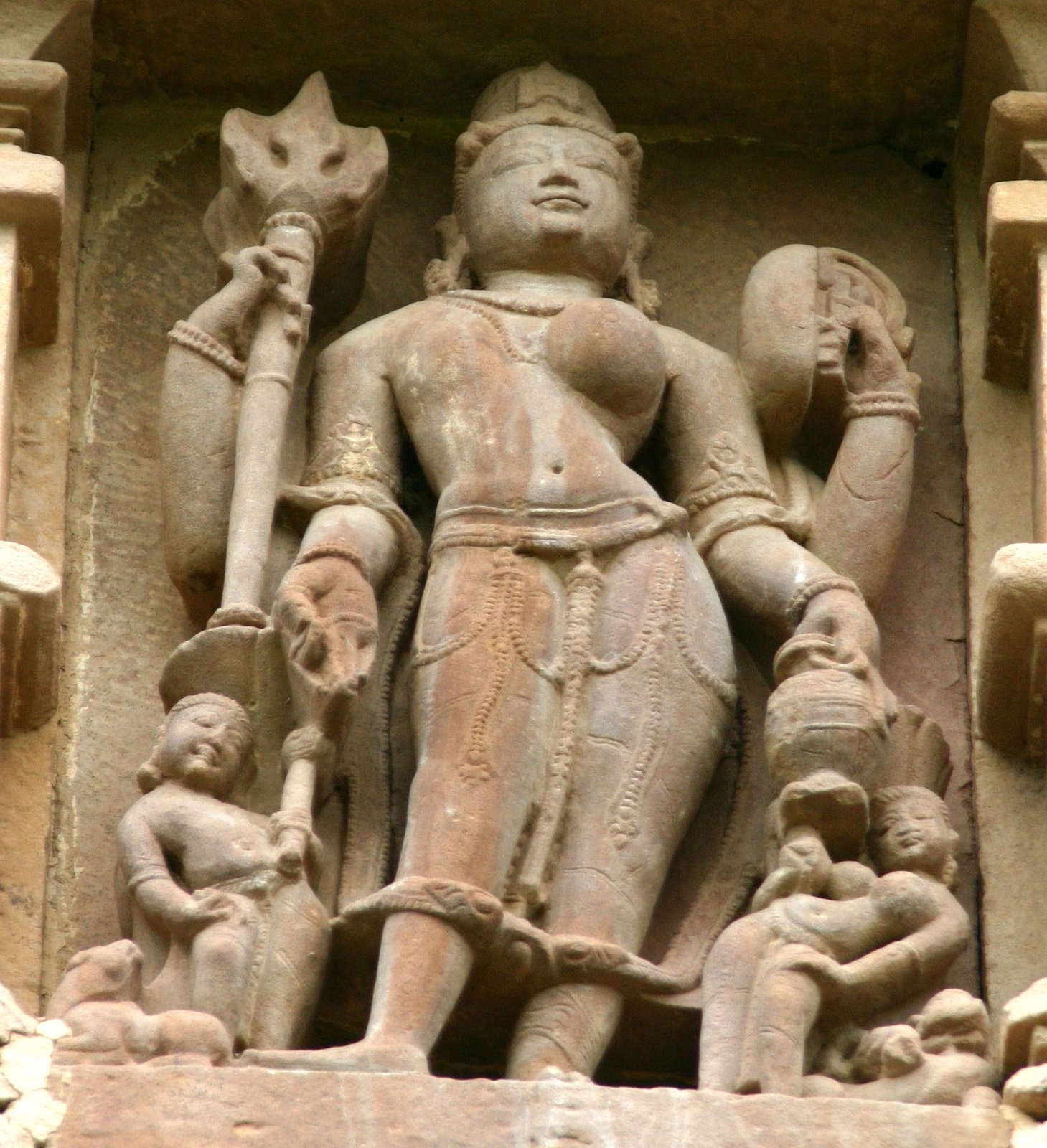
 Ardhanarishvara sculpture, Khajuraho. From Wikipedia, subject to this Creative Commons license

Public discussion about those opposing the Delhi High Court's reading down of Section 377 of the Indian Penal Code has centred around the several self-proclaimed religious groups, astrologers and babas. None of these pious souls have, however, based their arguments on Hindu scriptures or philosophy (but mainly on 'morality'). There's been a lot of foaming at the mouth with arguments against gay sex that are laughable. We haven't heard a single one of these gentlemen (why are the god-women silent?) quote from the Vedas or the Smritis, nor do they cite any Indian philosopher or saint in their support. Net-net, they argue that the High Court judgement offends Indian values and threatens Indian culture.
The sad truth is that like most Indians, we don't know our own religion and culture well enough to be able to make such claims. How many of us are aware about the various schools of Hindu philosophy? Do we even know what is Hinduism, or who is a Hindu? Even the courts have tied themselves into knots over this question. If the pundits who oppose the Delhi High Court ruling were asked to sit for an MA level exam on Indian Philosophy, would any of them secure even pass-grade marks?
On the other hand, there is enough scholarly work produced within the gay community itself by Giti Thadani, Ruth Vanitha, Saleem Kidwai and Ashok Row Kavi, individually, and sometimes in collaboration, to counter the Indian culture argument. Where does one even start to cite examples from our mythology, literature and history. It is a past far richer than Western traditions of homosexuality.
Hindu society's outlook towards gay sex has been at best benign and at worst neutral. The point that in Hindu traditions the atman or soul is free of the common dualities of biological sex and gender needs reiteration. Just as God is neither a 'he' nor a 'she'. Not this, not that. He is beyond concepts and so is the atman. The dualities of gender roles are man-made. What stands between man and God is the sense of self, or ego, which leads to the five vikaars of vanity, anger, greed, attachment and, of course, lust. Tell me where in our scriptures is lust defined as gay lust alone, not heterosexual lust? Much paper and ink has been spared recently to speculate about what India's 'modern' sanyaasi-politician (no, not Ramdev) must have thought about gay sex. Gandhi quite likely would have seen it on a par with heterosexuality, regardless of whether he was himself gay, bisexual or hetero. His ideal was complete celibacy, of body and mind (As the Bible says, even looking upon a woman lustfully is adultery.)
The fact is that in Hinduism there is no compulsion for anything. Gandhi would have certainly opposed the attempt by the self-styled moral brigade to impose their beliefs on the entire country. As we know, he was a great proponent of ahimsa—one of the fundamental principles of ashtanga yoga. Ahimsa is commonly understood as simply meaning non-violence and perhaps vegetarianism, but it stands for much more: love for all creatures; renunciation of not just physical violence but also mental violence; and not imposing your beliefs on anyone. It therefore behoves the 'pundits' that they desist from doing so in the case of gay sex as well.
They lack any moral or religious grounds to oppose the High Court verdict and LGBT people. The less said the better about the morality of the Catholic Church. (Just to remind readers, it is not opposing the Delhi High Court verdict but that hasn't stopped it from bleating about it in the media.) Its turpitude stands exposed—years of sexual abuse of scores of children and women who tried to take refuge in its fold. Judge not lest ye be judged, O Church! You need to set your own house in order before reminding others about Leviticus. Who knows, maybe the fate of Sodom and Gomorrah awaits you. Until then every Catholic ought to bear the cross for the sins of the Church, which they have funded.
The religious opponents of the Delhi High Court decision would have earned our respect for at least being true to themselves had they admitted their antagonism was because of their personal fears and biases, rather than being based on Indian religion and culture. They stand exposed before us as hypocrites and bigots who only know how to hate. They forget the teaching of their own traditions. God is not hate but Truth and Love.