Showing posts with label Homophobia. Show all posts

Saturday, September 13, 2014

How we define 'rape'

I won't go into the question of what sexual acts should or should not be termed 'rape'. In this note, I just want to remind ourselves that Indian law and society only see it as a violent act against a woman by a man. I believe that it should include such acts against any person, by any person, man, woman, transgender....
We live in a time where gender lines are blurring and people are asserting the rights to change parts of their physical sex and to present themselves free of the limitations of birth, culture, orthodox ideas of gender identity and sexual orientation. In such a time, shouldn't our rape/sexual assault laws become fair and representative of our evolving notions of selfhood? Even the widely acclaimed Nalsa judgement on recognition of transgenders does not expand the definition of rape although it expresses concern that they are vulnerable to sexual assault.
Friends and acquaintances have told me about men who approached them claiming that they were forced to have sex by other men and even women. Such incidents may be fewer in number than rapes in the traditionally or legally understood sense, but does it mean there should not be laws against such acts? 
I acknowledge this is not the first time this question is being raised. In fact there was a proposal to amend the law in India after the well-known gang rape of a woman in Delhi in December 2012, but I believe the Congress-led government developed cold feet, ironically under pressure from women's groups
What prompted me to bring up this question again today were two recent news items. One was a report of an incident of groping of a woman by a hijra in Bombay. And the other was a report about Pinki Pramanik's exoneration of charges including rape
Some LGBT activists are unsurprisingly thrilled at the second piece of news. I am not in a position to discuss the merits of the cases against Ms Pramanik but note that as per the news report, the defence claimed that the charge of rape cannot be made because the law doesn't apply to rape by a woman. My sympathies are with Ms Pramanik with regards to the way she was treated by the media, the police, the medical establishment and many other people as a fallout of the cases against her. And I am glad the cases have now concluded. 
More importantly for the rest of us, especially lawmakers, it is time to reflect on the questions I have asked here and consider amending the law. I admit the rape of a man by another man is already within the ambit of Section 377 of the Indian Penal Code. In fact, there seem to be some Indians who think sex between men can only be an act of violence and not an expression of love. The example of such a person that immediately comes to mind is Meenakshi Lekhi, although she is a lawyer and a lawmaker, and she ought to know better. Some people will find the example of Ms Lekhi extreme and refuse to see her as someone with a belief system beyond one that is articulated by the BJP to which she belongs. But I believe she represents the tip of the metaphorical iceberg of ignorance in Indian society.
The battle against such ignorance will continue. As queer individuals, I hope we are more aware and proactive about fixing much that is wrong with our laws, not just Section 377.

PS. I am not sure why activists who have taken up this case of rape of a hijra   (http://timesofindia.indiatimes.com/city/jaipur/Transgender-alleges-gang-rape-by-cops-in-Ajmer/articleshow/36365899.cms) aren't insisting on application of Section 377. They seem to be relying on the rape law instead.

Saturday, March 17, 2012

In the name of God


A version of this piece appeared in Bombay Dost magazine in August 2011. The Supreme Court of India is currently hearing arguments against the Delhi High Court's decision to read down Section 377 of the Indian Penal Code.  

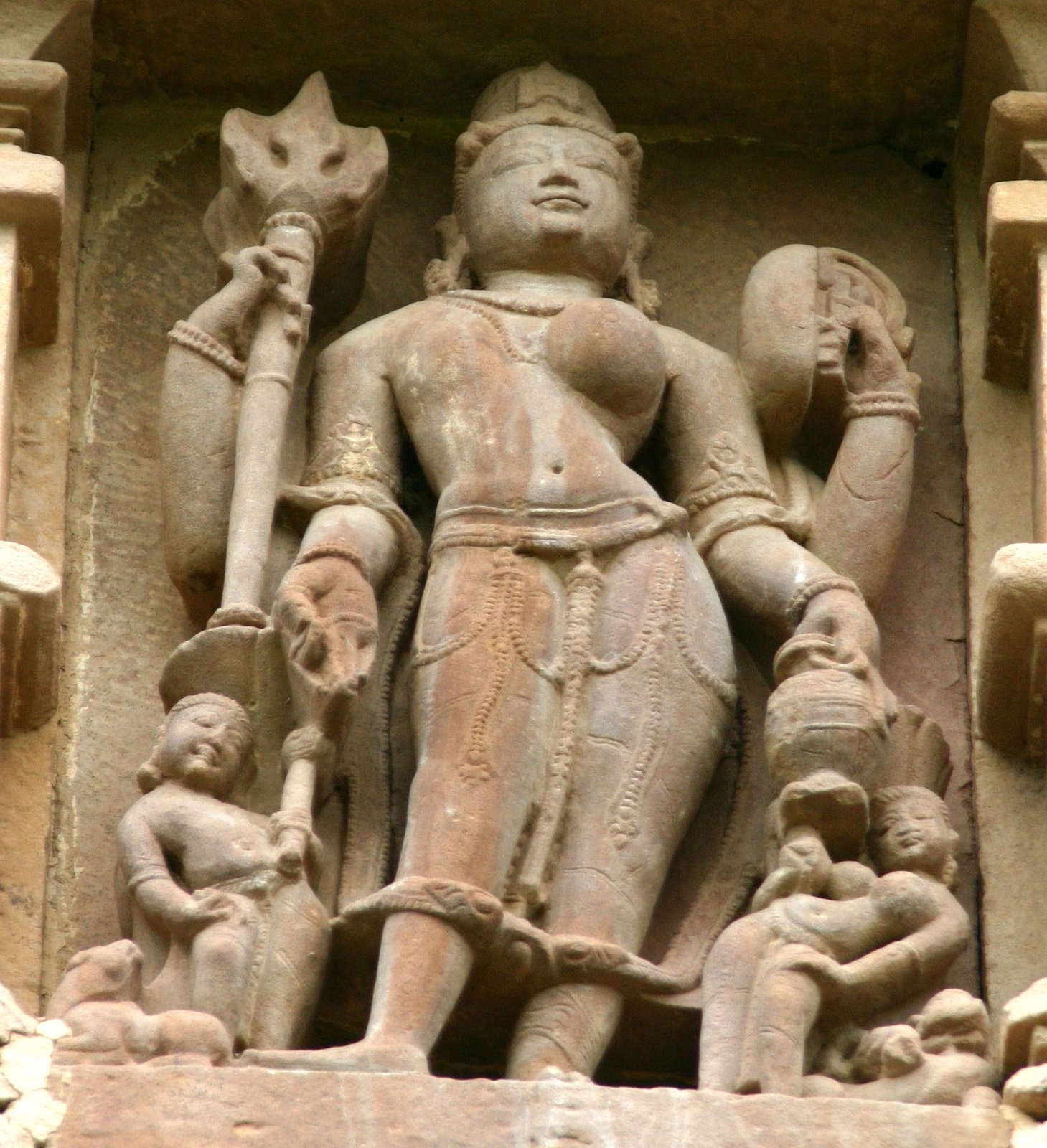
 Ardhanarishvara sculpture, Khajuraho. From Wikipedia, subject to this Creative Commons license

Public discussion about those opposing the Delhi High Court's reading down of Section 377 of the Indian Penal Code has centred around the several self-proclaimed religious groups, astrologers and babas. None of these pious souls have, however, based their arguments on Hindu scriptures or philosophy (but mainly on 'morality'). There's been a lot of foaming at the mouth with arguments against gay sex that are laughable. We haven't heard a single one of these gentlemen (why are the god-women silent?) quote from the Vedas or the Smritis, nor do they cite any Indian philosopher or saint in their support. Net-net, they argue that the High Court judgement offends Indian values and threatens Indian culture.
The sad truth is that like most Indians, we don't know our own religion and culture well enough to be able to make such claims. How many of us are aware about the various schools of Hindu philosophy? Do we even know what is Hinduism, or who is a Hindu? Even the courts have tied themselves into knots over this question. If the pundits who oppose the Delhi High Court ruling were asked to sit for an MA level exam on Indian Philosophy, would any of them secure even pass-grade marks?
On the other hand, there is enough scholarly work produced within the gay community itself by Giti Thadani, Ruth Vanitha, Saleem Kidwai and Ashok Row Kavi, individually, and sometimes in collaboration, to counter the Indian culture argument. Where does one even start to cite examples from our mythology, literature and history. It is a past far richer than Western traditions of homosexuality.
Hindu society's outlook towards gay sex has been at best benign and at worst neutral. The point that in Hindu traditions the atman or soul is free of the common dualities of biological sex and gender needs reiteration. Just as God is neither a 'he' nor a 'she'. Not this, not that. He is beyond concepts and so is the atman. The dualities of gender roles are man-made. What stands between man and God is the sense of self, or ego, which leads to the five vikaars of vanity, anger, greed, attachment and, of course, lust. Tell me where in our scriptures is lust defined as gay lust alone, not heterosexual lust? Much paper and ink has been spared recently to speculate about what India's 'modern' sanyaasi-politician (no, not Ramdev) must have thought about gay sex. Gandhi quite likely would have seen it on a par with heterosexuality, regardless of whether he was himself gay, bisexual or hetero. His ideal was complete celibacy, of body and mind (As the Bible says, even looking upon a woman lustfully is adultery.)
The fact is that in Hinduism there is no compulsion for anything. Gandhi would have certainly opposed the attempt by the self-styled moral brigade to impose their beliefs on the entire country. As we know, he was a great proponent of ahimsa—one of the fundamental principles of ashtanga yoga. Ahimsa is commonly understood as simply meaning non-violence and perhaps vegetarianism, but it stands for much more: love for all creatures; renunciation of not just physical violence but also mental violence; and not imposing your beliefs on anyone. It therefore behoves the 'pundits' that they desist from doing so in the case of gay sex as well.
They lack any moral or religious grounds to oppose the High Court verdict and LGBT people. The less said the better about the morality of the Catholic Church. (Just to remind readers, it is not opposing the Delhi High Court verdict but that hasn't stopped it from bleating about it in the media.) Its turpitude stands exposed—years of sexual abuse of scores of children and women who tried to take refuge in its fold. Judge not lest ye be judged, O Church! You need to set your own house in order before reminding others about Leviticus. Who knows, maybe the fate of Sodom and Gomorrah awaits you. Until then every Catholic ought to bear the cross for the sins of the Church, which they have funded.
The religious opponents of the Delhi High Court decision would have earned our respect for at least being true to themselves had they admitted their antagonism was because of their personal fears and biases, rather than being based on Indian religion and culture. They stand exposed before us as hypocrites and bigots who only know how to hate. They forget the teaching of their own traditions. God is not hate but Truth and Love.

Wednesday, September 28, 2011

Covering the queer spectrum: My new MxM India post

In a new, lengthy post commissioned by MxM India, I argue that the media needs to go beyond the superficial in their coverage of queer issues and offer some pointers. No, 'MxM India' is not shorthand for 'men who have sex with men'. It is all about 'mainstream media' (which is abbreviated similarly to 'MSM'). MxM India is a "360-degree business-to-business media company that plans to empower the media and marketing fraternity with indepth news, information, research and analyses."

Here's a teaser from the post:

There’s little to be happy about the state of journalism today, but this piece will try to remain upbeat and offer constructive comments on coverage of LGBT (or queer issues). The focus is mainly on the English-language media. First, a pat on the back for doing by and large a good job, especially in the editorials department! A lot of the reportage is either by queer and queer-friendly journalists themselves or driven by them.
These journalists are also the most innovative in their approach to queer issues and in touch with the pulse of queer communities despite not being on an ‘official queer beat’— another sign to management why they need diversity and inclusion in their organisation. Having people in your media house from different communities helps you understand them, reach out to the communities and broaden and strengthen your coverage. One editor deserves a special mention here. Aditya Sinha, currently with DNA, launched a weekly ‘Sexualities’ page (it was mainly about queer issues) back in April 2008 when he was with The New Indian Express. The practice continues at DNA, which has a monthly page. Quality may be ultimately important but for marginalised identities this is great exposure in the short run.
This is not to say that there is no homophobia in the media. Of course there is sensational and sleazy reporting (TV9’s “sting” op in Hyderabad; “Central Park a Gay Paradise”: Mid-Day); insensitive, even biased writing (“A baby for gay, deaf, mute couple? It’s cruel”: Deccan Chronicle) and totally muddled, pseudo-scientific horrors as well (“Lesbian? Not quite, say psychiatrists” and “Trapped In Bad-Girl Taboo”: The Times of India). Then, there is the let’s-not-talk-about-it attitude, which is probably true of quite a few publications, but probably nowhere as ingrained as at the Reader’s Digest. However, change is inevitable and so is a debate on queer issues.
What the media needs to do most is to go beyond the superficial, else both reader and writer will be bored! And which reader would like to start their day with a humdrum piece on a Pride parade when there are so many other colourful diversions? There are many interesting queer stories waiting to be told yet. If mainstream newspapers and channels won’t tell these, then the competition will (for instance online news magazines such as FirstPost.com). The White House has a new LGBT liaison but how many people know he is of Indian origin: Gautam Raghavan. Usually, the press goes gaga over desi achievers, even those who want to deny their Indian origins. So isn’t the Gautam Raghavan story worth an interview or at least some column inches? Let’s start with the basic issue though....

Read much more here: http://www.mxmindia.com/2011/09/newswatch-covering-the-queer-spectrum/